
Why can short-wave infrared laser break through smoke, rain and haze
The extremely low visibility in foggy weather will bring major safety hazards to traffic, but it is not impossible to crack. The short-wave infrared band refers to wavelengths between 1400-2500 nanometers, which are invisible to the naked eye. Minerals, man-made substances and other ground features have special compositions. Short-wave infrared can "see" this unique composition, but it is "invisible" to the naked eye and visible near-infrared light waves.
The imaging principle of short-wave infrared is very similar to that of visible light. The difference is that the wavelength of short-wave infrared can "bypass" small particles in smoke, fog, and haze; compared with medium-wave infrared and long-wave infrared, short-wave infrared has better detail resolution and Analytical ability can well identify what the target is. This allows short-wave infrared to clearly image objects in haze and thick smoke. It has many unique advantages and application values, such as:
● Strong ability to penetrate fog
Infrared shortwave can penetrate haze, dust, smoke and other atmospheric particles, improving the visibility and recognition rate of targets.
● High sensitivity
Infrared shortwave can utilize the infrared radiation prevalent in the target reflection environment to achieve high-definition, high-contrast, and high-resolution imaging effects.
● Good concealment
Infrared shortwave is invisible, does not reveal the observer's position, and does not cause interference or stimulation to the target.
● Good compatibility
Infrared shortwave can use conventional low-cost visible light lenses, without the need for complex and expensive cryogenic refrigeration systems, and is easy to integrate and install.
● Rich spectral features
Infrared shortwave can detect the spectral characteristics of many substances, such as moisture, carbonates, sulfates, etc., to achieve classification and identification of substances.

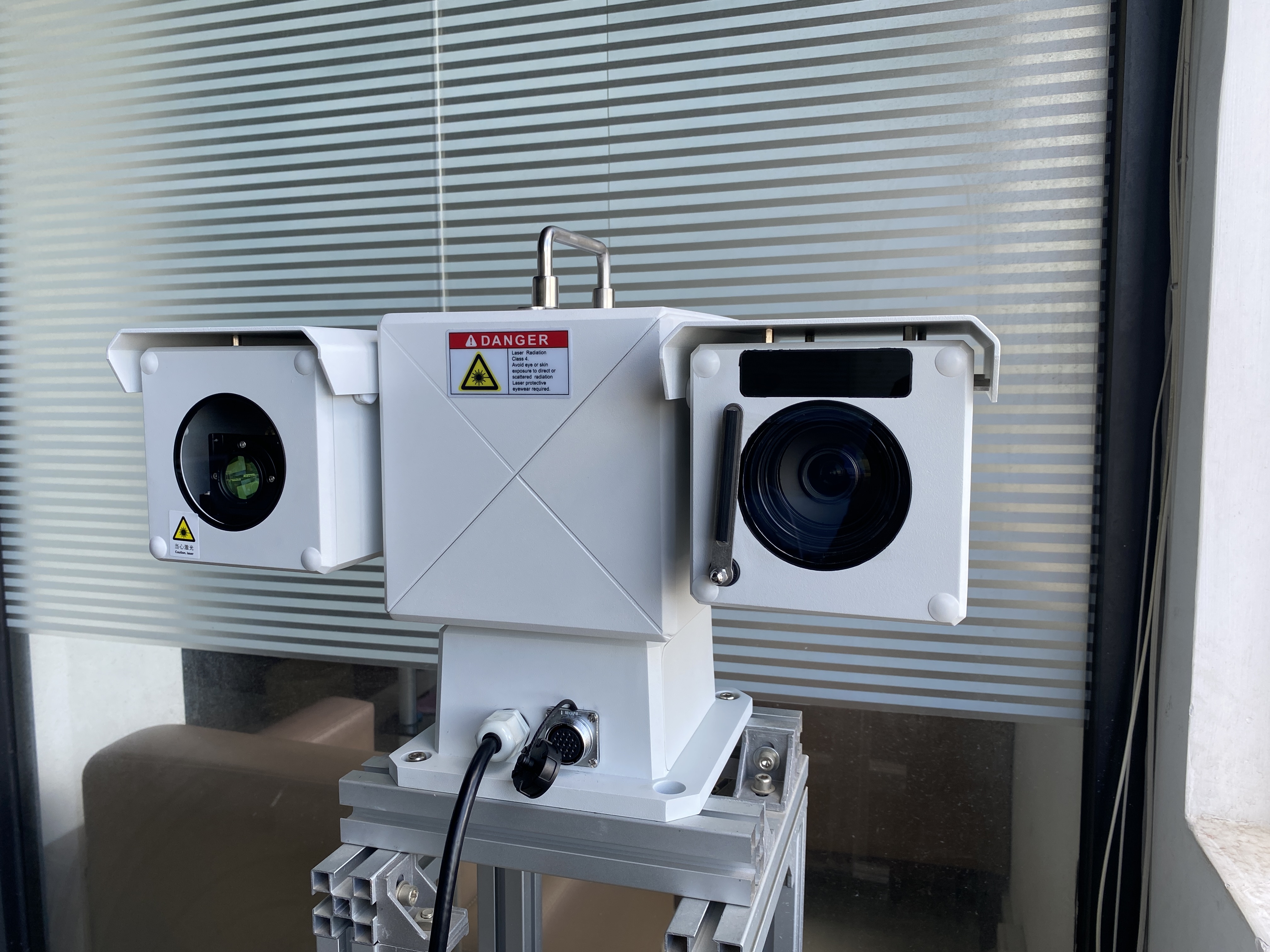
The 1550nm SWIR laser lighting module independently developed by Hongyang has a strong ability to penetrate smoke, rain and haze, with a lighting distance of up to 500 meters - 2000 meters. It is suitable for use in security monitoring, automatic driving, border and coastal defense monitoring through smoke, rain and haze. , industrial testing and other application fields.
The electro-optical masts of modern submarines require multispectral imaging and detection. For example, visible light imaging usually cannot observe targets through haze, dust, and smoke, but short-wave infrared imaging can easily achieve this. In this case, short-wave infrared cameras have better imaging effects.
One important difference between shortwave infrared and mid- and long-wave infrared is that it uses reflected light imaging rather than radiometric thermal imaging. Medium and long wave cameras cannot see important features of maritime targets, such as the name of the ship, the characteristics of the ship, etc. Short wave infrared cameras can provide assistance here.
 Classification and Performance
 The Use and Development Direct
 Why can short-wave infrared la
 Long Distance 1 To 3 Km PTZ Ca


-
ShenzhenCity, Guangdong Province