
Classification and Performance Comparison of Infrared Laser Lamps
There are various classifications of infrared laser lamps, including distance, optical power, wavelength, function, light source, safety standards, temperature range, and other classification standards. With the continuous development of technology, various classification standards are permeating each other, and the boundaries of classification are becoming increasingly blurred. Only by using infrared laser lamps to effectively illuminate the distance can product application requirements be described in both concrete and simple terms. Therefore, the infrared laser lighting industry and its application market are gradually using effective lighting distance as the best standard for dividing infrared laser lamps.

With the development of infrared laser technology and the continuous expansion of market applications, the illumination distance of infrared laser lamps is also getting farther and farther, with products appearing at 1000 meters, 2000 meters, 3000 meters... and even over 10000 meters. On the other hand, overly detailed product segmentation is not conducive to cost control and production management of infrared laser lamps. The original level division and classification are becoming increasingly unsuitable for market applications and the development requirements of production and manufacturing. The mainstream manufacturers in the industry have gradually simplified the distance classification levels of infrared laser lamps to 300, 500, 800, 1000, 1500, 2000, 3000, 5000, 10000 meters, etc. The distance classification of products has also been reclassified into three categories: medium distance (within 500 meters), long distance (800-2000 meters), and ultra long distance (over 2000 meters). The comparison of distance division between the new and old versions is shown in the table below:
Old Distance Classification | Close range | Medium to Long Range | long distance |
<100m | <500m | >500m | |
New Distance Classification | Medium to Long Range | long distance | Ultra Long Range |
<500m | 800-2000m | >2000m |
Comparison Table for Distance Classification of New and Old Infrared Laser Lighs
The second popular classification in the market is based on optical power: 1, 2, 3, 4, 5,... nW. Because in the early days, a certain amount of light power usually had corresponding illumination distances, such as 1W of light power, which is usually an effective illumination distance of 200 meters, 2W corresponding to 300 meters, 3W corresponding to 500 meters, 5W corresponding to 800 meters, and 10W corresponding to 1000 meters. Therefore, as long as the optical power of the infrared laser lamp is known, the effective illumination distance range of the infrared laser lamp can be basically known.
However, the corresponding value between light power and lighting distance is not fixed, and the lighting distance corresponding to products of the same power may vary between different brands or even at different stages of the same brand. As shown in the table below:
Brand / Power | 2W | 3W | 5W | 8W | 10W | 12W |
HONGYANG | 500m | 500m | 800m | 1000m | 1000m | 1500m |
Others A | 300m | 500m | 800m | 800m | 1000m | 1200m |
Others B | 200m | 300m | 500m | 800m | 900m | 1000m |
It can be seen that there are certain misconceptions in dividing by power, especially with the rapid development of infrared laser technology, which will become increasingly obvious, chaotic, and unable to adapt to market demand.
The third classification is based on the wavelength of infrared laser lamps. There are various near-infrared wavelengths available on the market, including 808, 810, 830, 850, 940, 950, 960, 980, and 1100nm. In night vision monitoring applications, the longer or shorter the wavelength, the better its performance. Due to the different functional characteristics of infrared lasers with different wavelengths, they are generally comprehensively measured and selected based on practical application requirements from multiple aspects such as red explosion, fog penetration, luminous power, camera sensitivity, effective distance, and power consumption.
It should be noted that the occurrence of numerous similar wavelength values is not only due to the differences in the emitted light waves and positive and negative errors of the laser itself, but also due to the deliberate competitive strategy of merchants. Because, in fact, the same function is within a certain wavelength range, and the effect difference between different values within the range is not significant. Below, we will list the functional characteristics of each wavelength into three levels based on the seven major factors and compare them:
Functional Features / Wavelength | A level | B leve | C leve |
808、810、830、850 | 940、950、960 | 980、1100 | |
Red explosion phenomenon | Yes | Faint | Non |
Mist permeability | Low | Medium | Better |
Luminous power | High | Medium | Low |
Camera sensitivity | High (More than 10 times B) | Low | Low |
Maximum effective lighting distance | Ultra Long Range | Medium to close range | close range |
Consumption | Low | Medium(More than 4 times B) | High |
Comparison of functional characteristics of multiple wavelengths that can be divided into three levels and different levels
The fourth classification is based on functional characteristics, that is, using a certain function of infrared laser lights as a classification, such as automatic dimming, synchronous zoom, intelligent control, remote control, fog penetration, coastal defense, and so on. There is no fixed standard for classification, and most of it is just a marketing strategy for merchants. Moreover, with the development of infrared laser technology, the homogenization of products is becoming increasingly high, and these classifications will gradually become blurred or even disappear.
There are several other non popular classification standards: laser principles, temperature ranges, and safety standards.
However, in market applications, it is more customary to view these classification standards as the quality and performance of infrared laser lamps.
When choosing an infrared laser lamp, as long as you consider four factors: distance, power, wavelength, and function, you can accurately choose the product that suits you.
 Classification and Performance
 The Use and Development Direct
 Why can short-wave infrared la
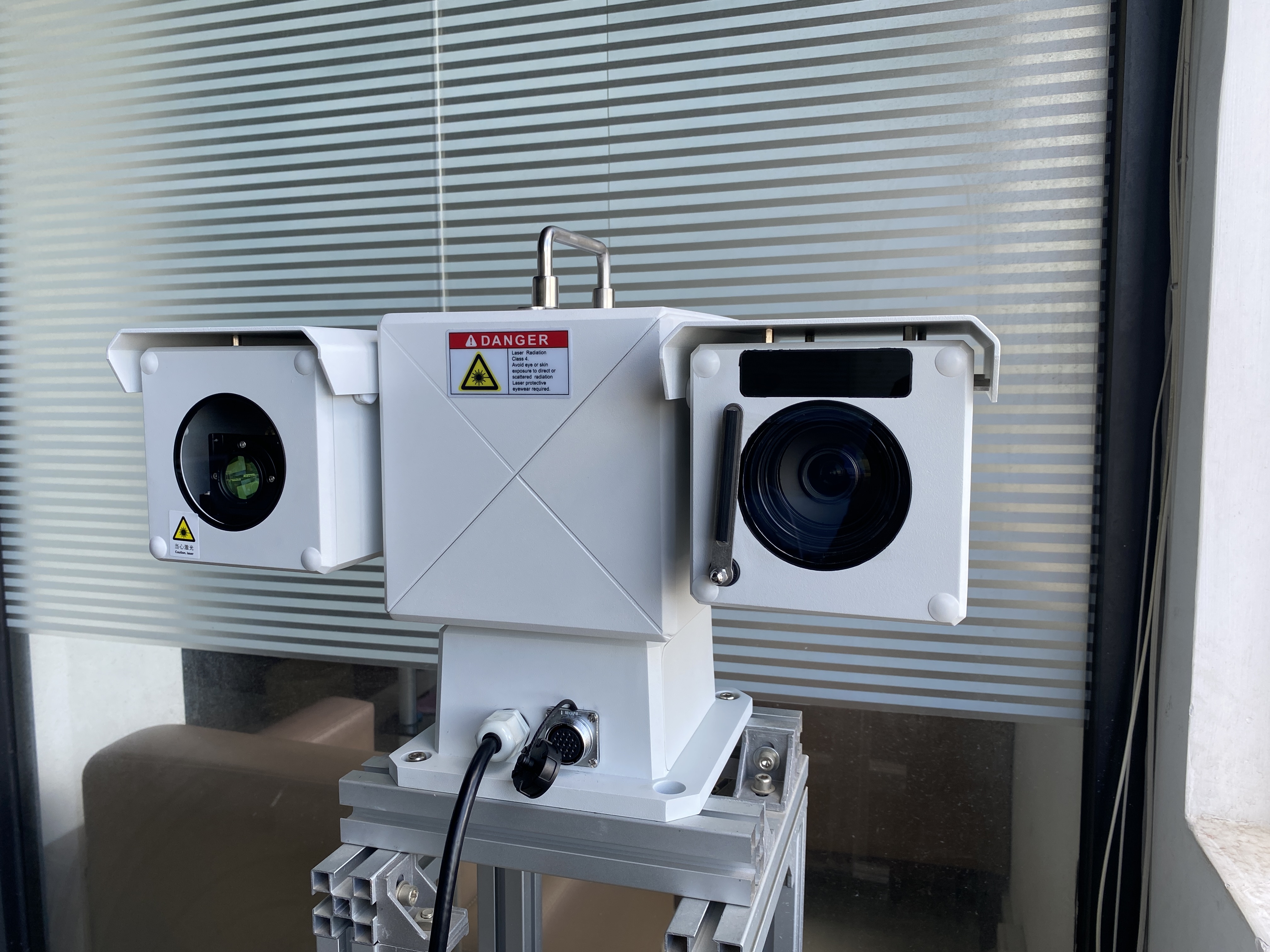 Long Distance 1 To 3 Km PTZ Ca


-
ShenzhenCity, Guangdong Province